Pushing
Play this step Its whole project
This is the step where it becomes a game. You'll push a box, and win:
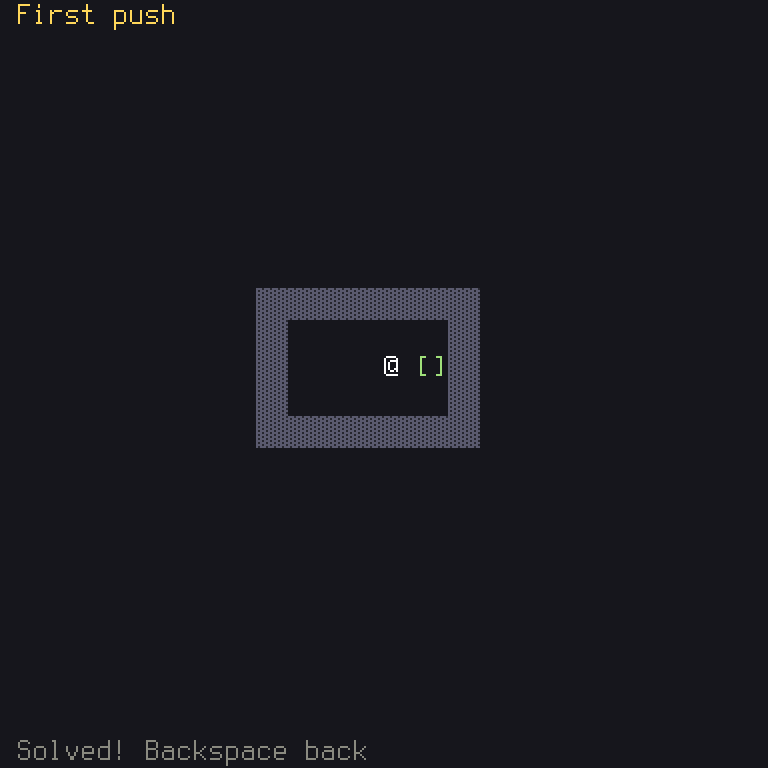
Here's the pay-off from step 3. All of the game's new behaviour goes in the rules. The screen barely changes, because it was already sending commands and showing whatever the state says.
| File | What changes |
|---|---|
crates/game/src/rules.rs | Pushing, and winning |
crates/game/src/board.rs | One line: the help line after a win |
crates/game/files/en.ron | The words for that |
crates/game/tests/board.rs | Tests of pushing and winning |
New words for what can happen
A box can now move, or be stuck, and a level can be over. So the rules need new words. In
rules.rs, Event gains Pushed:
/// What happened.
Rust: an enum's possibility can have named fields, like a struct.
Pushed { from, to }says plainly which is which, wherePushed(Pos, Pos)would leave you to remember.
and Refusal swaps Box for two new reasons:
/// Why a command was refused.
The Display code below it needs the same two reasons. Here the compiler helps you: as soon as
you remove Box, the match in fmt stops compiling, and tells you what to fix. This happens all
the time in Rust. Change a type, and follow the errors. They lead you to every place that needs
to change.
Pushing
A box can move if the tile behind it is free. Picture the player, the box and the tile past the box, in a line:
The new part is the middle: to is where the player would step, and past is one further. If
there's a box at to, and past holds a wall or another box, the push is refused. && is "and",
|| is "or", and the brackets group them as in arithmetic.
And apply moves the box first, then the player:
self.boxes.remove(&to) removes a box from the set at to if there is one, and answers whether
it did. So that if reads: "if there was a box here, it's now one further along". Notice that
apply doesn't re-check anything. check has already said this is allowed, which is why it's the
first thing apply calls.
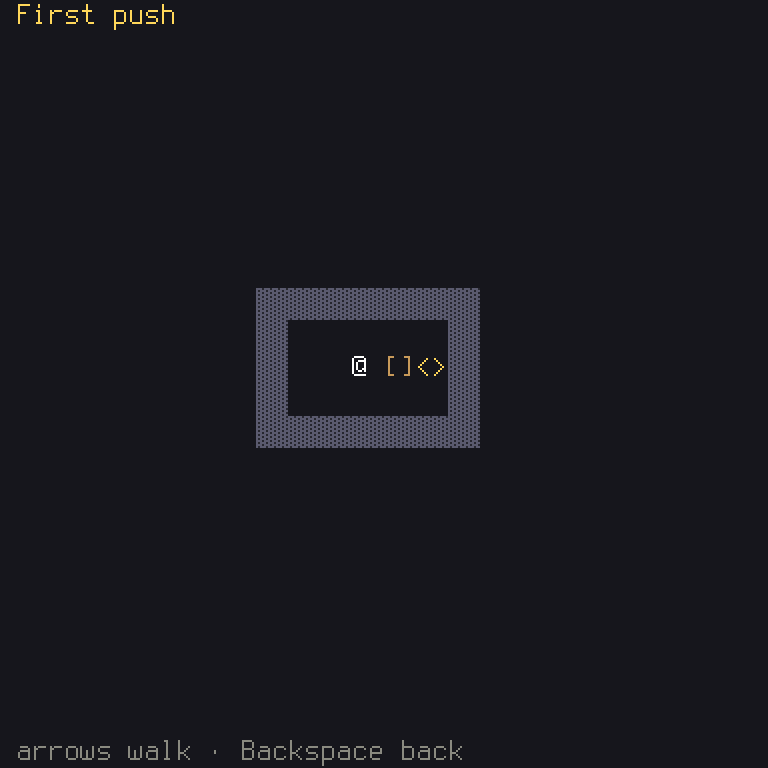
Now run it, and push the box around. Here it is after one step right:
Winning
Game idea: the game's outcome is a question you ask of the state, not something you have to remember to record. No command has to remember to say "you won". There can't be a bug where one forgets.
Add a type for how a level ends. Won holds no data: it's a struct with no fields, as the title was:
/// How a level ends: only one way, every box on a target.
;
In TurnRules, change type Outcome = (); to type Outcome = Won;, and answer the question:
/// Won once every box is on a target.
That's the entire win condition: the set of boxes is the same as the set of targets. A set was
a good choice here, since two sets are equal however they were filled. .then_some(Won) turns true
into Some(Won), and false into None.
The start of check also refuses every move once the level is won, which is the Refusal::Over
you added.
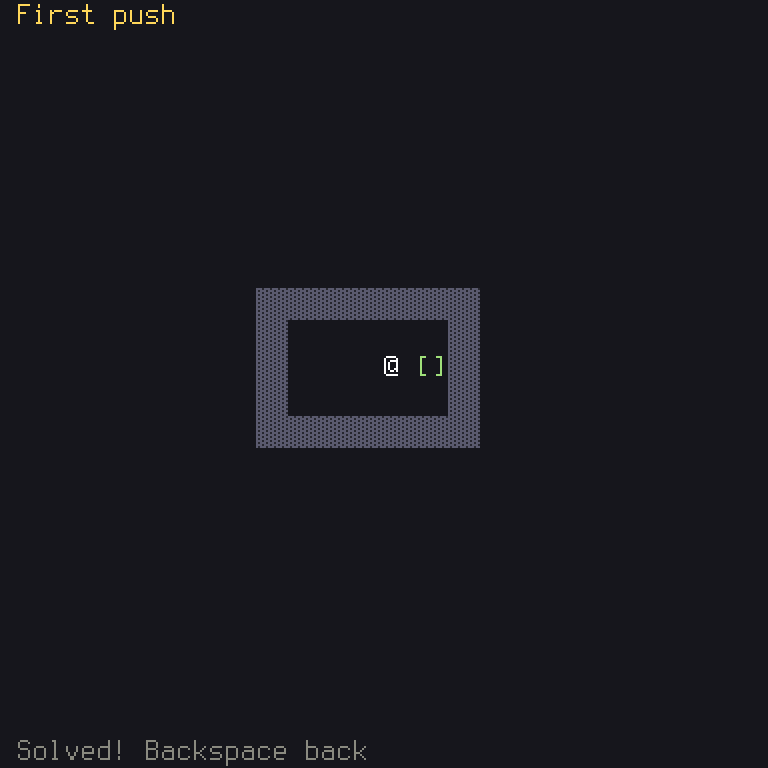
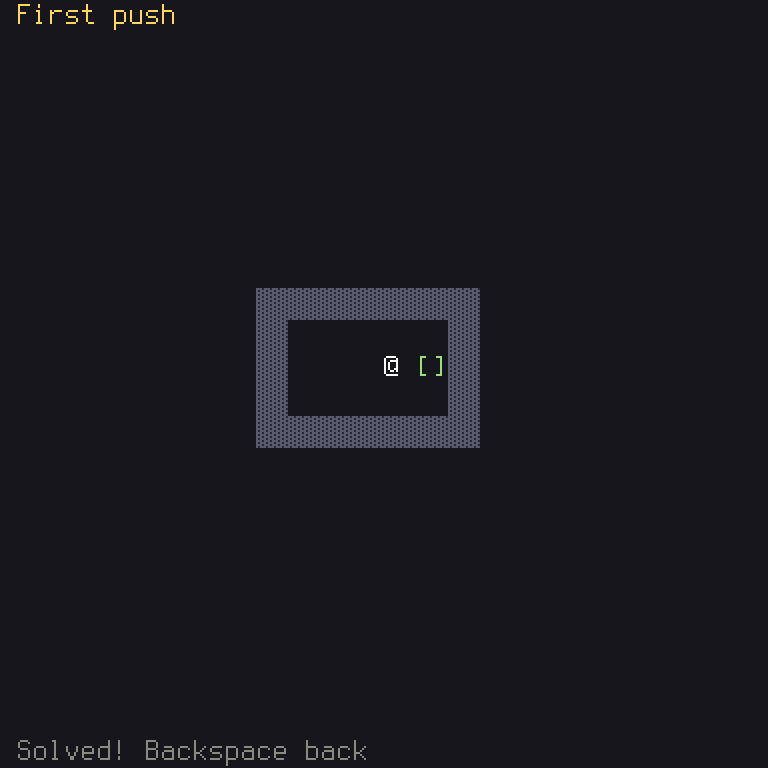
The box turning green is already done. In step 2, scene worked out each box's home, and
Pieces picks the box_home color for it. Nobody has to tell the screen about winning, because it
only ever draws the state.
Saying so
The board picks its help line according to the outcome. In view, replace the let help line:
let help = if self.puzzle.outcome.is_some else ;
and add the words to files/en.ron:
    // The board.
    "board.help": "{Cursor} walk · {Cancel} back",
    "board.help.won": "Solved! {Cancel} back",
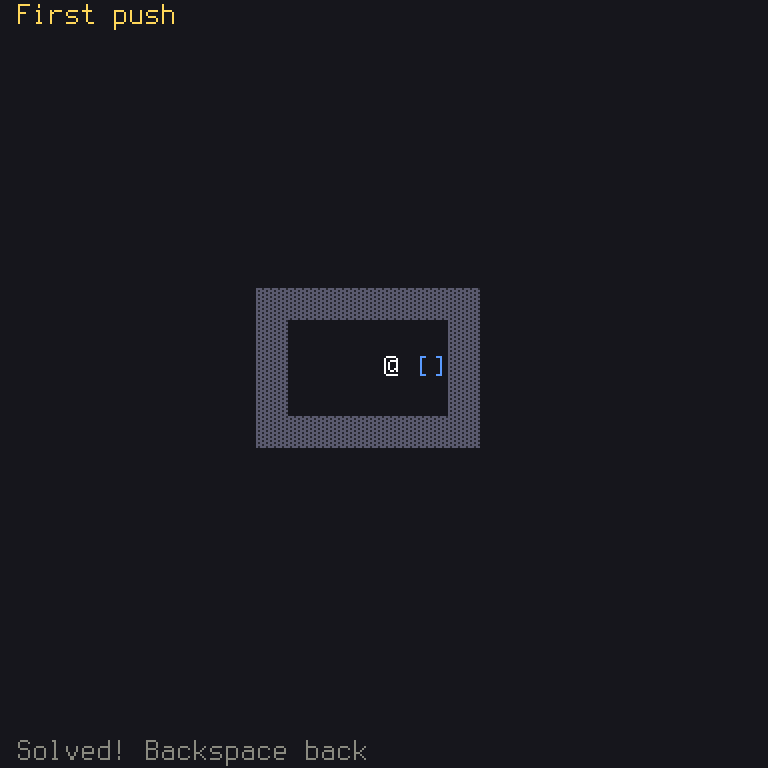
Once again, words and colors are in their own files, so they're quick to change:
In crates/game/files/en.ron:
- "board.help.won": "Solved! {Cancel} back",
+ "board.help.won": "You did it! {Cancel} back",
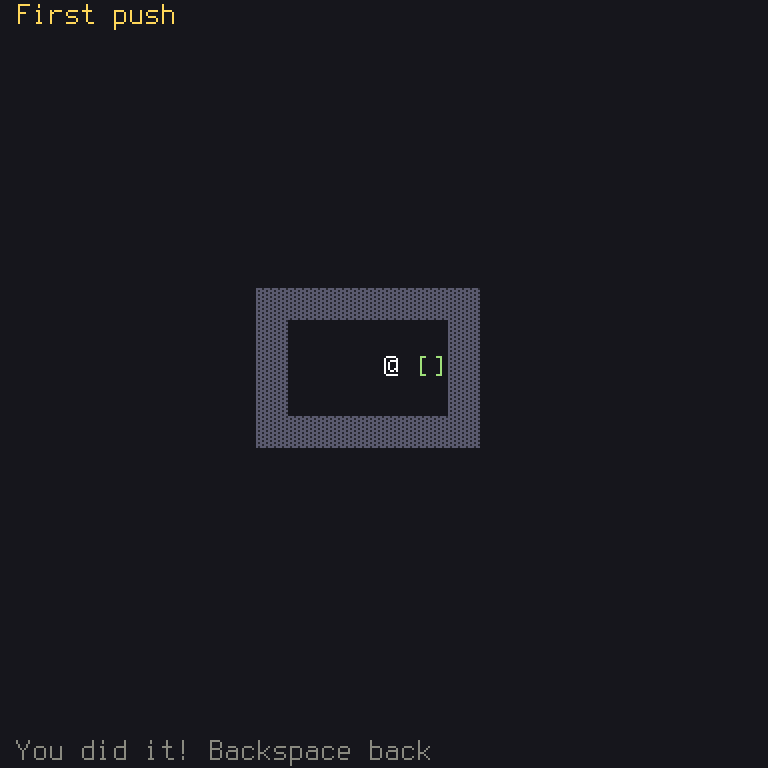
In crates/game/files/palette.ron:
- "box_home": "#a0e07a",
+ "box_home": "#5a9bff",
The tests
Add these to tests/board.rs, with use shuyi::core::TurnRules; at the top so that outcome()
can be called:
Each of these plays the actual game, by pressing keys. Reading them, you can follow what's happening on the board in your head: that's a good sign in a test. The second walks round the box, pushes it up against the wall, and tries once more.
Level 1 is won in two moves. Try it.
What you learned
- Rust: enum possibilities with named fields,
||, and letting the compiler's errors walk you through a change. - Game idea: the outcome is a question about the state.
- Shuyi: how little the screen has to do, once the rules own everything.
Next: a puzzle needs an undo.